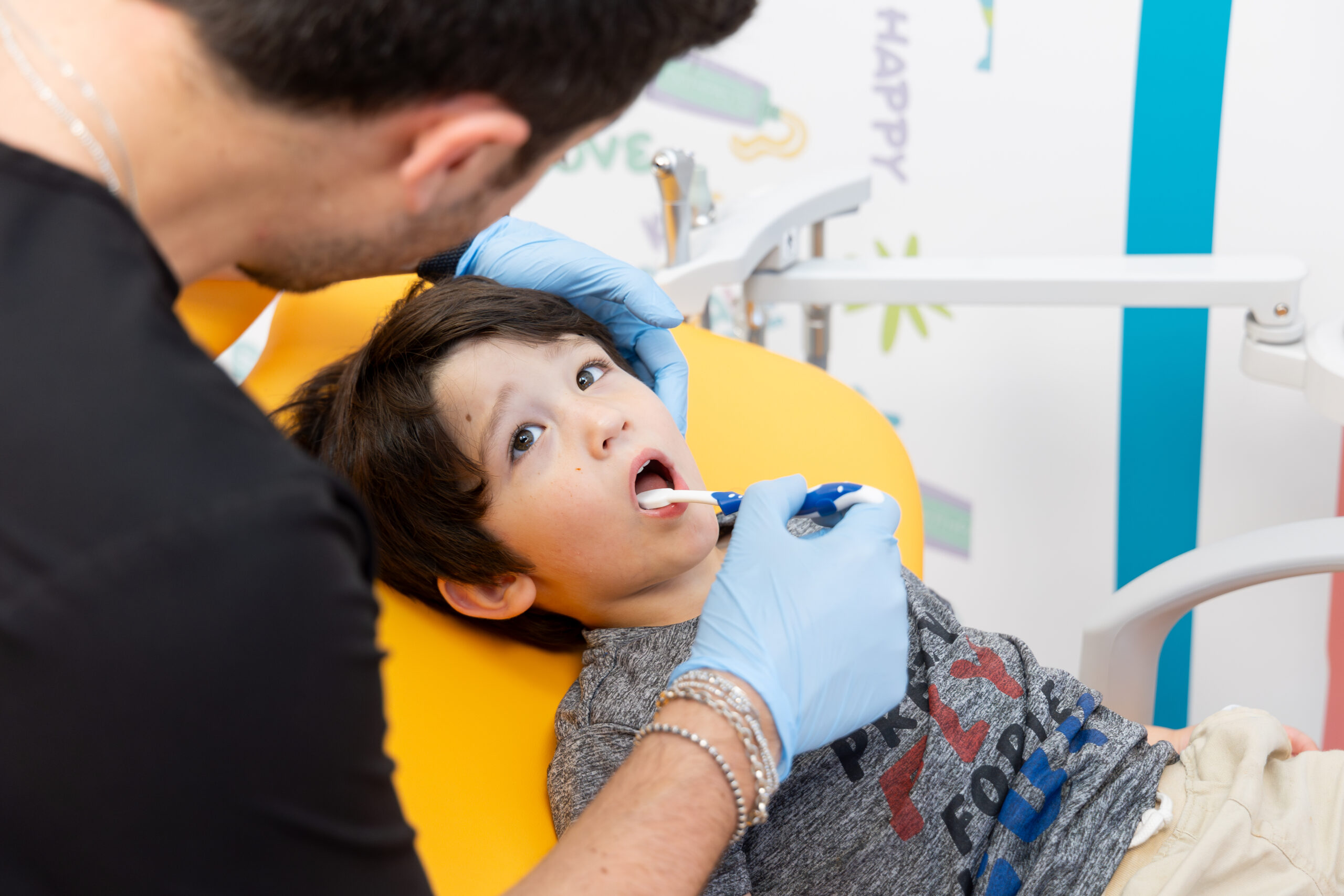
Airway-focused orthodontics looks at how a child’s jaw growth, bite, and oral habits may relate to how they breathe and sleep. The goal is the same as any orthodontic care: a healthy bite and a confident smile. Along the way, we also pay attention to things like mouth breathing, tongue posture, and narrow dental arches that can affect how a child’s mouth and airway develop.
Medically reviewed by Dr. Ronnel Azizollahi
SCO Board Certified Orthodontist. Double graduate of UC San Francisco (dental school and orthodontic residency).
Reviewed: July 22, 2026 · Read Dr. Azizollahi’s bio
We screen for signs of airway-related concerns as part of an orthodontic exam. We do not diagnose sleep apnea. A diagnosis of sleep apnea or a sleep-related breathing disorder can only be made by a physician, and it may involve an evaluation by a pediatrician, an ENT, a sleep physician, or a sleep study. We work alongside those providers, not in place of them.
Get a Complimentary Orthodontic Consultation

Schedule a complimentary orthodontic consultation and discover how we can help your child’s smile shine bright.
What we look at
- Narrow upper jaw, crossbite, or crowding
- Mouth breathing or a chronic open-mouth posture
- Low tongue posture or tongue-tie concerns
- Snoring or restless sleep (as a screening signal, not a diagnosis)
What orthodontics can and cannot do here
It helps to be clear about scope. Orthodontic treatment can guide jaw growth and create more room in a narrow arch. What it does not do:
- It does not cure sleep apnea. Sleep apnea is a medical condition diagnosed and managed by physicians.
- Making more room in the upper jaw does not guarantee a better airway or better breathing. A wider arch can change the structure, but structure and function are not the same thing.
- Orthodontic care does not replace an evaluation by a pediatrician, ENT, or sleep physician.
The American Association of Orthodontists puts it plainly: increasing the size of the upper airway does not necessarily mean breathing or sleep will improve, and only a physician can diagnose a sleep-related breathing disorder. We think that honesty matters, especially for your child.
How we work with your family
If we notice signs during an exam, we will tell you what we see, explain what it might mean, and help you get the right evaluation. When treatment makes sense, we coordinate with your child’s other providers so everyone is working from the same picture.
Related topics
Sources: American Association of Orthodontists white paper on sleep-disordered breathing and orthodontics; American Academy of Pediatric Dentistry Policy on Obstructive Sleep Apnea.
Schedule Your Child’s Appointment Today
Schedule an airway orthodontic evaluation to see what your child’s growth and bite may be telling us.